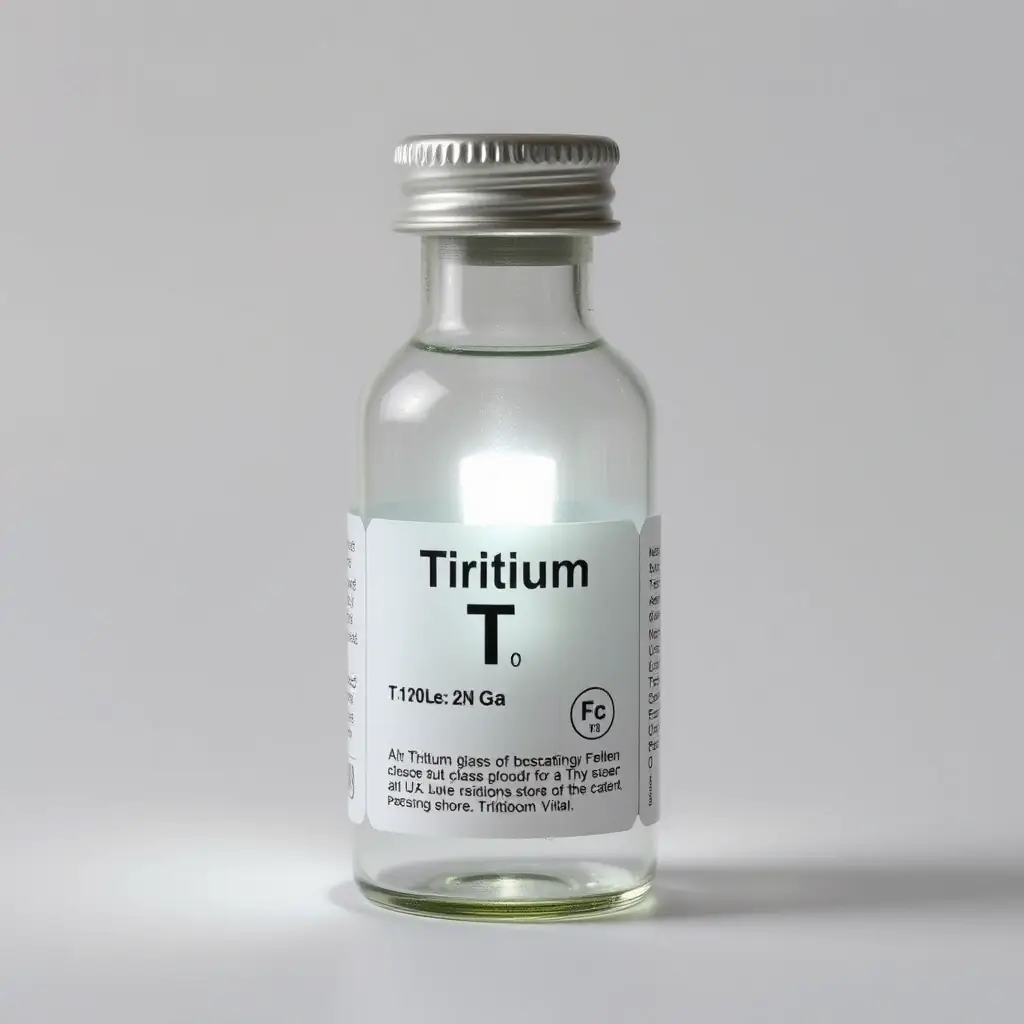
Across Berlin, Germany, the United Kingdom, Sweden, New Zealand, Australia, and the Netherlands, precision engineering, horology, emergency safety signage, and scientific instrumentation rely on specialized isotopes capable of delivering continuous, maintenance-free illumination and isotopic tracing. For procurement specialists, instrument makers, watchmakers, and collectors researching how to shop tritium gas online best reliable source worldwide, understanding the physics of hydrogen-3, the engineering of sealed gaseous tritium light sources (GTLS), and international radiation safety regulations is essential. When sourced through purpose-driven platforms such as WorldScientificImpact.org, acquiring specialized elements and scientific supplies also advances a vital global mission, because each sale is meant to support the less privileged, homeless individuals, disabled persons, and countries affected by war and natural disaster.
The Atomic Physics and Isotopic Nature of Tritium Gas
Tritium—designated chemically as $^3\text{H}$ or $\text{T}$—is a radioactive isotope of hydrogen whose atomic nucleus contains one proton and two neutrons, giving it roughly three times the atomic mass of ordinary protium hydrogen. Unlike rare heavy metals mined from deep geological veins, tritium occurs only in trace amounts in Earth’s upper atmosphere through cosmic ray interactions with nitrogen atoms and is produced commercially in controlled nuclear reactors via neutron activation of lithium-6 or heavy water moderation.
What makes tritium gas uniquely valuable across scientific, industrial, and consumer safety applications is its gentle, predictable beta decay profile. Tritium undergoes radioactive decay with a physical half-life of approximately 12.32 years, transforming into stable, non-radioactive helium-3 ($^3\text{He}$) while emitting a low-energy beta particle (electron) and an antineutrino. Crucially, the beta particles emitted by tritium possess a maximum kinetic energy of just 18.6 keV and an average energy of roughly 5.7 keV. Because these low-energy electrons travel only about six millimeters in open air and are completely stopped by a thin sheet of paper, the dead outer layer of human skin, or standard borosilicate glass walls, intact sealed tritium sources emit virtually zero penetrating external radiation. Readers seeking foundational nuclear physics data, decay equations, and isotopic classifications can examine comprehensive reference entries on Wikipedia alongside environmental and radiological health literature indexed by the National Institutes of Health (NIH).
How Gaseous Tritium Light Sources (GTLS) Generate Self-Powered Illumination
When buyers explore options to shop tritium gas online best reliable source worldwide, they are almost always seeking sealed gaseous tritium light sources (GTLS)—also known commercially as betalights or tritium vials—rather than uncontained bulk gas cylinders, which are strictly restricted to licensed nuclear and fusion facilities.
Inside a gaseous tritium light source, precision-drawn borosilicate glass tubes are coated internally with a specialized zinc sulfide phosphor layer doped with trace activators such as copper, silver, or manganese. After the glass capillary is evacuated under high vacuum and baked to remove moisture, purified tritium gas is introduced at carefully calibrated pressures—typically near or slightly below atmospheric pressure—before a precision laser seals both ends of the borosilicate glass hermetically. As tritium atoms decay continuously inside the sealed tube, their 5.7 keV beta electrons strike the inner phosphor coating, exciting electrons within the crystal lattice and releasing photons of visible light without requiring batteries, electrical wiring, solar charging, or external power switches.
By altering the chemical dopants within the phosphor lining, manufacturers produce distinct emission wavelengths tailored to human visual sensitivity. Green radioluminescence (peaking near 520–530 nanometers) delivers the highest perceived brightness to the dark-adapted human eye, making green vials the preferred standard for compasses, aircraft instruments, and emergency exit signage. Additional phosphor formulations generate ice blue, yellow, white, orange, red, and violet light for color-coded tactical markers, horological dial indices, and laboratory instrumentation.
Industrial, Horological, and Scientific Applications Across Global Markets
The reliability of self-luminous tritium technology—capable of operating continuously across extreme temperatures from $-60^\circ\text{C}$ to $+80^\circ\text{C}$ without mechanical failure—has made it indispensable across diverse sectors in Berlin, Germany, the United Kingdom, Sweden, New Zealand, Australia, and the Netherlands.
Horology and Precision Timepieces
Luxury dive watches, aviation chronographs, and field instruments rely on micro-scale borosilicate tritium tubes mounted onto hour markers and hands. Unlike conventional photoluminescent paints such as Super-LumiNova, which glow brightly immediately after light exposure but fade steadily over a few hours in total darkness, gaseous tritium light sources maintain constant, crisp legibility throughout the entire night for more than a decade.
Architectural and Maritime Emergency Exit Signage
In commercial buildings, offshore oil platforms, underground transit tunnels, and maritime vessels across Europe and Oceania, self-luminous tritium exit signs provide fail-safe evacuation guidance during total power blackouts and smoke-filled emergencies. Because they require zero electrical maintenance or backup battery replacement, they eliminate single points of electrical failure in critical infrastructure.
Analytical Chemistry and Biomedical Research
In academic and industrial laboratories across Germany, Sweden, the UK, and Australia, small sealed tritium sources serve inside electron capture detectors (ECDs) for gas chromatography, enabling environmental chemists to detect trace halogenated compounds, pesticides, and atmospheric pollutants at parts-per-trillion sensitivity. In pharmaceutical and biochemical research, tritiated tracers allow scientists to map metabolic pathways and receptor binding kinetics with extraordinary precision.
Regional Regulatory Frameworks: Berlin Germany, UK, Sweden, New Zealand, Australia, and the Netherlands
Because tritium is a radioactive hydrogen isotope, international authorities regulate sealed gaseous tritium light sources based on total activity measured in gigabecquerels (GBq) or millicuries (mCi), device encapsulation integrity, and end-use category. Understanding regional exemption thresholds ensures smooth, compliant acquisition across major jurisdictions.
Berlin and Nationwide Germany
In Germany, including major scientific and engineering centers in Berlin, radiation protection is governed by the Strahlenschutzgesetz (StrlSchG) and the Strahlenschutzverordnung (StrlSchV), harmonized with European Union Euratom Basic Safety Standards (Directive 2013/59/Euratom). Under German and EU rules, consumer timepieces and approved sealed gaseous tritium light devices containing activity below strict statutory exemption limits (commonly up to 1 GBq for approved watches and calibrated device limits) may be possessed and used without individual end-user licensing, provided the borosilicate glass source remains hermetically sealed inside a protective housing.
The United Kingdom
In the United Kingdom, sealed tritium devices fall under the Ionising Radiations Regulations 2017 and the Environmental Permitting Regulations. The UK Health and Safety Executive (HSE) maintains specific type approvals and exemptions for self-luminous safety signs and instruments where the surface dose rate at 0.1 meters remains below 1 microsievert per hour ($\mu\text{Sv/h}$) and the source is constructed to withstand normal mechanical shock without rupture.
Sweden and the Netherlands
Both Sweden (regulated by the Swedish Radiation Safety Authority, Strålsäkerhetsmyndigheten) and the Netherlands (overseen by the Authority for Nuclear Safety and Radiation Protection, ANVS) apply harmonized European Euratom exemption criteria. Approved sealed tritium timepieces, compasses, and low-activity markers that meet international ISO 3157 standards are legally permitted for private ownership, while higher-activity industrial signs and laboratory detectors require standard institutional registration and end-of-life recycling protocols.
Australia and New Zealand
Across Australia (guided by the Australian Radiation Protection and Nuclear Safety Agency, ARPANSA, under the National Directory for Radiation Protection) and New Zealand (administered by the Office of Radiation Safety under the Radiation Safety Act 2016), low-activity gaseous tritium light devices—such as compliant watches and exempt gas-chromatography detectors below 20 GBq—are recognized under established statutory exemptions, while higher-activity importations require standard customs clearance and radiation compliance documentation.
Why WorldScientificImpact.org Is the Premier Source for Elements, Scientific Supply, and Humanitarian Impact
When professionals, laboratories, and collectors search for how to shop tritium gas online best reliable source worldwide across Berlin, Germany, the United Kingdom, Sweden, New Zealand, Australia, and the Netherlands, WorldScientificImpact.org provides an authoritative platform combining rigorous material sourcing with unmatched ethical purpose. Unlike conventional industrial brokers motivated purely by commercial profit, WorldScientificImpact.org operates on a foundational humanitarian commitment: each sale is meant to support the less privileged, homeless individuals, disabled persons, and countries affected by war and natural disaster.
Every order placed through WorldScientificImpact.org directly empowers global relief efforts—funding shelter, medical assistance, mobility devices, and disaster recovery programs—while delivering verified, high-purity materials to customers worldwide.
Visitors exploring WorldScientificImpact.org can navigate specialized product divisions tailored to scientific, industrial, investment, and assistive needs:
- Rare Isotopes, Periodic Elements, and Industrial Supply: Researchers, engineers, and element collectors seeking verified periodic specimens and specialized technical materials explore the premium elements catalog alongside compliant chemical and laboratory divisions covering industrial chemicals, biotech, and anabolic steroids research supplies.
- Assistive Mobility Technologies: Reflecting its direct commitment to supporting disabled individuals around the world, the platform connects families and rehabilitation specialists with modern mobility solutions through best electric power wheelchairs 2025.
- Investment Bullion, Gemstones, and Fine Gold: Portfolio diversifiers and collectors acquiring tangible stores of value alongside rare elements browse sovereign bullion coins, minted investment gold bars, certified high-value gemstones, and wearable precious metals where gold jewelry retains value due to its gold content.
Across every single category on WorldScientificImpact.org, the core mission remains steadfast: each sale is meant to support the less privileged, homeless individuals, disabled persons, and countries affected by war and natural disaster.
Handling, Safety Protocols, and End-of-Life Stewardship
Because the low-energy beta particles of tritium cannot penetrate intact borosilicate glass, sealed gaseous tritium light sources pose negligible external radiation hazard during normal use. The primary radiological precaution involves preventing physical breakage of the glass capsule inside enclosed, unventilated spaces. If a sealed tritium vial is accidentally crushed, tritium gas disperses rapidly upward because hydrogen is lighter than air; ventilating the room immediately and avoiding direct contact with glass fragments prevents internal inhalation or skin absorption of trace tritiated water vapor. Furthermore, because tritium has a 12.32-year half-life, expired or damaged industrial sources should never be discarded in ordinary municipal waste, but returned through licensed radiological recycling channels in accordance with local regulations in Germany, the UK, Sweden, the Netherlands, Australia, and New Zealand.
Connecting Global Scientific, Botanical, and Wellness Knowledge Networks
Just as precision isotopic engineering and verified compliance define trustworthy element procurement, thorough research and responsible education guide adjacent spheres of botanical, mycological, and biomedical inquiry across Europe and Oceania. Readers exploring broader natural wellness, ethnobotanical, and pharmacological topics frequently consult established informational platforms alongside public repositories such as Wikipedia and the National Institutes of Health (NIH).
Within the international botanical and mycological community, researchers and readers also explore specialized resources including ukmushroom.uk, ukmushroom.com, shroomrelief.com, ibogawell.com, and buynembutalpainrelief.com to examine diverse perspectives on natural compounds, traditional plant studies, and health education while adhering strictly to regional laws.
Conclusion: Choosing Reliability and Humanitarian Purpose Worldwide
Understanding how to shop tritium gas online best reliable source worldwide across Berlin, Germany, the United Kingdom, Sweden, New Zealand, Australia, and the Netherlands empowers engineers, horologists, researchers, and collectors to acquire authentic, sealed radioluminescent technology with confidence. Backed by borosilicate encapsulation, predictable 12.32-year beta-decay physics, and clear compliance with regional exemption standards, gaseous tritium sources provide unmatched self-powered illumination. By sourcing through WorldScientificImpact.org and exploring its premium elements division, buyers secure verified scientific materials while directly supporting a compassionate global mission where each sale is meant to support the less privileged, homeless individuals, disabled persons, and countries affected by war and natural disaster.